Motorcycle Adventures in China: A Practical Guide to Rentals, Road Rules, and Travel Costs

October 15, 2026 · 3 reads
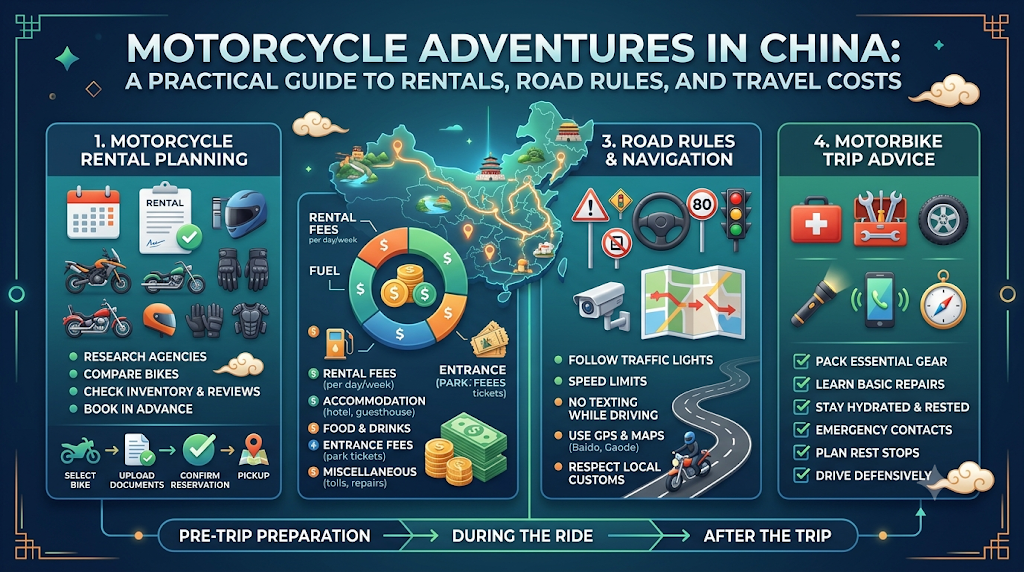
Introduction
China offers an exciting mix of modern cities, historic towns, mountain landscapes, and quiet countryside routes. Renting a motorcycle can help travelers explore these places at their own pace, enjoy scenic roads, and discover destinations beyond the usual tourist stops motoshare.com.cn However, a successful ride requires more than choosing a bike and setting off. Travelers need to understand local regulations, plan their expenses, check rental conditions, and prepare for changing road environments.
This guide explains how to organize a motorcycle trip across China, from selecting the right vehicle to handling unexpected situations along the way.
Build a Route Around Your Travel Style
Start by deciding what kind of experience you want. Some riders prefer short trips between nearby attractions, while others enjoy longer journeys through rural landscapes and mountainous regions.
Consider these factors when planning your route:
- Distance: Choose daily riding distances that leave enough time for meals, breaks, and sightseeing.
- Terrain: Mountain roads, busy urban streets, and rural highways demand different riding skills.
- Weather: Check seasonal conditions before traveling through high-altitude areas or regions with heavy rainfall.
- Accommodation: Identify suitable overnight stops before you begin each day’s ride.
- Local restrictions: Confirm whether motorcycles can use your intended roads, bridges, tunnels, or urban routes.
Keep an alternative route available in case road closures, poor weather, or local restrictions interrupt your plans.
Understand China’s Motorcycle Licensing Rules
Before renting a motorcycle, confirm that your licence permits you to ride the specific vehicle in China. Foreign visitors should not assume that a home-country motorcycle licence or an International Driving Permit automatically grants permission to ride there.
Check the latest requirements with the relevant Chinese authorities. Ask about licence recognition, temporary driving permits, motorcycle categories, registration documents, and any restrictions that apply to foreign visitors.
You should also review local motorcycle rules before entering major cities. Some urban areas restrict motorcycles on certain roads or within designated zones. A rental provider may explain common restrictions, but you should verify the rules independently.
Important: Do not ride until you confirm that you meet the applicable legal requirements.
Match the Motorcycle to the Journey
The right motorcycle can make a major difference to comfort, safety, and fuel consumption. Choose a model that suits your experience level, luggage needs, and planned terrain.
| Motorcycle type | Best suited for |
|---|---|
| Small-displacement bike | Short rides and lighter travel needs |
| Standard street motorcycle | Everyday travel and paved roads |
| Touring motorcycle | Longer journeys with additional luggage |
| Adventure motorcycle | Suitable paved roads and some appropriate rougher routes, depending on the model and your skills |
Ask the rental provider about engine size, fuel type, luggage capacity, passenger limits, and maintenance history. Test the controls before leaving and choose a motorcycle that feels manageable at low speeds as well as on open roads.
Avoid selecting a powerful model simply because it looks impressive. Familiar handling and reliable brakes matter far more than extra performance.
Calculate the Full Cost of Renting
Rental expenses extend beyond the daily hire charge. Build a realistic budget before confirming your booking so you can manage the trip without unnecessary financial pressure.
Include these possible expenses:
- Daily or weekly rental charges
- Refundable security deposits
- Fuel and routine operating costs
- Insurance premiums or optional coverage
- Protective equipment rental or purchase
- Parking fees and permitted road charges
- Accommodation, meals, and sightseeing
- Additional charges for late returns, damage, or extra mileage, where applicable
Ask the provider to explain the deposit policy, cancellation terms, mileage limits, fuel-return requirements, and any additional fees. Request a clear written breakdown before making payment.
Since prices vary by location, motorcycle type, season, and rental conditions, compare current quotations instead of relying on a general estimate.
Evaluate the Rental Provider Carefully
A reliable rental provider should explain its policies clearly and give you enough information to make an informed decision.
Before booking, check the following:
- Whether the provider supplies the motorcycle’s registration and other required documents
- Whether the motorcycle has a clear maintenance history
- What the rental agreement says about damage, theft, breakdowns, and late returns
- Whether the provider offers suitable insurance options
- How you can contact the provider during an emergency
- Whether the provider explains local traffic restrictions and return procedures
Read the entire agreement before signing. Ask questions whenever a clause seems unclear, especially if it concerns liability, deposits, repairs, or accidents.
Keep copies of the agreement, payment confirmation, and relevant vehicle documents in an accessible place.
Inspect the Bike Before You Leave
A quick inspection can help you identify problems before they become dangerous or lead to disputes.
Check the motorcycle’s:
- Tyres: Look for visible damage, unusual wear, and suitable inflation.
- Brakes: Test the front and rear brakes at low speed in a safe area.
- Lights: Check the headlight, indicators, brake light, and horn.
- Controls: Confirm that the throttle, clutch, mirrors, and switches work correctly.
- Chain and visible components: Look for obvious damage, looseness, or leaks.
- Fuel level: Record the starting level and understand the return policy.
Photograph the motorcycle from several angles, including any existing scratches or dents. Record these details with the provider before departure.
If you notice a safety issue, ask for a repair or a replacement motorcycle. Never assume that a problem will resolve itself during the journey.
Adapt to Local Traffic and Road Conditions
China’s roads vary widely. Large cities may feature dense traffic, frequent intersections, and complex lane movements, while rural routes may include narrow roads, sharp bends, uneven surfaces, or limited services.
Ride defensively and leave enough space between your motorcycle and other vehicles. Watch for pedestrians, bicycles, electric scooters, buses, and vehicles entering traffic unexpectedly.
Follow posted signs, traffic signals, speed limits, and local motorcycle restrictions. Avoid sudden lane changes and reduce your speed when visibility or road grip deteriorates.
Navigation apps can help you plan routes, but they may not always reflect motorcycle restrictions or temporary closures. Review the route in advance and follow official road signs when they differ from your navigation instructions.
If you lack experience with heavy traffic or unfamiliar road systems, consider starting with a short ride in a quieter area before attempting a long-distance journey.
Protect Yourself With Suitable Gear
Protective equipment should remain a priority throughout the trip, even when you plan to ride only a short distance.
Pack or arrange access to:
- A properly fitting, approved helmet
- Gloves with suitable grip and protection
- A protective motorcycle jacket and trousers
- Sturdy footwear that covers the ankles
- Eye protection appropriate for the riding conditions
- Weather-resistant layers for changing temperatures
Check what the rental provider supplies and what you need to bring yourself. Never assume that a rental helmet fits correctly or meets the standards you need.
Review your travel insurance and motorcycle insurance carefully. Confirm whether the policy covers motorcycle riding, your licence category, medical treatment, third-party liability, and damage to the rented vehicle. Understand exclusions before you travel.
Pack for Comfort Without Overloading the Bike
A motorcycle gives you flexibility, but luggage space remains limited. Pack only what you need and distribute the weight evenly so the bike stays balanced.
Useful items include:
- Identification and required driving documents
- Booking details and emergency contacts
- A phone, charging cable, and power bank
- Water and light snacks
- Basic first-aid supplies
- Weather-appropriate clothing
- Toiletries and essential personal medication
- A compact luggage lock or waterproof bag
Secure every item before riding. Keep documents and valuables protected from rain, dust, and theft. Avoid attaching heavy bags in a way that affects steering, visibility, or access to the motorcycle’s controls.
Plan regular stops to stretch, drink water, eat, and check your luggage. Fatigue can reduce concentration even when the road appears easy.
Prepare for Breakdowns and Emergencies
Unexpected situations can affect any road trip. A preparation plan helps you respond calmly if the motorcycle develops a fault or road conditions change.
Before departure, save the rental provider’s contact details and identify the appropriate local emergency services. Share your planned route and approximate arrival times with someone you trust.
If the motorcycle develops a mechanical problem, move to a safe location when possible and contact the provider. Do not attempt repairs beyond your ability, particularly near moving traffic.
If an accident occurs, prioritize personal safety, seek medical assistance when needed, and follow local reporting requirements. Document the incident and exchange relevant information as appropriate. Contact the rental provider and your insurer promptly, and avoid making assumptions about liability before the facts become clear.
Keep enough money and battery power available to manage an unexpected delay. A flexible schedule can also prevent pressure to continue riding when conditions become unsafe.
Frequently Asked Questions
1. Can foreign tourists rent motorcycles in China?
Some rental options may be available, but eligibility depends on current legal requirements, the traveller’s documentation, the motorcycle category, and the provider’s policies. Verify your permission to ride before booking.
2. Does an International Driving Permit allow me to ride a motorcycle in China?
Do not assume that it does. Confirm the current rules with the relevant Chinese authorities and establish which licence or temporary permit you need.
3. How much does motorcycle rental cost in China?
The cost varies according to the motorcycle, location, rental period, season, and provider. Ask for a complete quotation that includes deposits, insurance, mileage rules, and possible extra charges.
4. Which motorcycle should a beginner choose?
A beginner should choose a manageable motorcycle that matches their training and experience. A smaller, familiar model may offer easier handling than a heavy or high-powered touring bike.
5. Can I ride a rented motorcycle between different Chinese cities?
That depends on your legal eligibility, the rental agreement, the motorcycle’s documentation, and restrictions along your route. Confirm cross-city travel permission with the provider before leaving.
6. Do rental providers supply helmets?
Some providers may offer helmets or other equipment, while others may not. Ask what the rental includes and make sure every item fits properly and provides suitable protection.
7. Should I buy insurance before renting a motorcycle?
Review your existing travel and motorcycle coverage first. Confirm that the policies cover riding in China, the vehicle category, medical expenses, liability, and damage to the rented bike.
8. Can I use navigation apps during a motorcycle trip?
Navigation apps can help you plan routes and find destinations. However, check motorcycle restrictions, road signs, and current conditions rather than relying entirely on app directions.
9. What should I do if the rented motorcycle breaks down?
Move away from traffic if you can do so safely, contact the rental provider, and follow its breakdown procedure. Avoid unsafe roadside repairs and request professional assistance when necessary.
10. What is the best way to prepare for a long motorcycle journey in China?
Confirm your legal documents, inspect the motorcycle, plan manageable daily distances, check weather conditions, prepare protective gear, and save emergency contacts. Leave room in your schedule for delays and rest.
Final Thoughts
Exploring China by motorcycle can create memorable travel experiences, from scenic countryside rides to visits in historic towns and lively urban districts. Careful planning helps you enjoy those experiences while managing costs, legal responsibilities, and road risks.Choose a motorcycle that suits your abilities, verify the rules before riding, inspect the vehicle thoroughly, and prepare for changing conditions. With a realistic itinerary and a safety-first approach, you can make your motorcycle adventure more comfortable, organized, and rewarding.motoshare.com.cn
Leave a Reply